
Featured Articles
  • What is an Adhesive Mount Antenna?

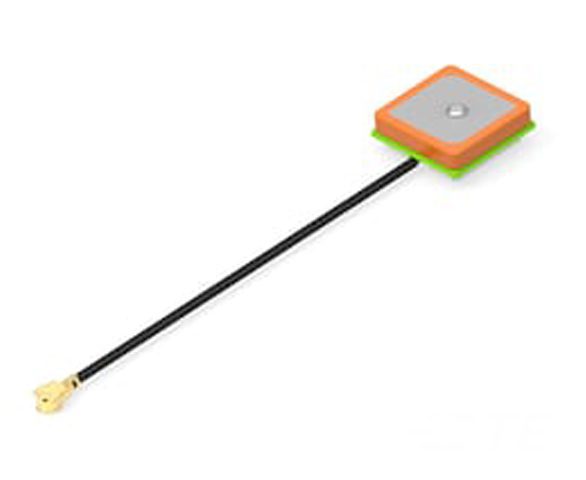
    An adhesive mount antenna is a low-profile external antenna that is attached to a surface using a pressure-sensitive adhesive backing, typically a foam tape. Available in single-band and multiband configurations covering cellular (2G through 5G), GNSS, Wi-Fi, Bluetooth, and combinations, adhesive mount antennas are commonly used for vehicle telematics, fleet tracking, IoT gateways, and assetRead More

  • What is a Connector Gasket?

    In harsh environment conditions, connector gaskets provide protection against a variety of hazards that can put connections at risk. Connector gaskets are sealing components installed between connector mating or mounting surfaces to provide environmental protection, electromagnetic shielding, or both. They compensate for surface irregularities and maintain sealing integrity under mechanical stress, vibration, thermal cycling, andRead More

Learning Tools

What are Nuclear Grade Connectors?

Meet the Connector: Nuclear Grade Connectors Nuclear grade connectors must be exceptionally reliable and rugged enough to withstand extreme conditions such as chemical exposure, high temperatures, radiation, and seismic activity. Connectors used in the nuclear energy industry must be exceptionally reliable and rugged enough to withstand extreme conditions such as chemical exposure, high temperatures, radiation, andRead More

What are Variable Reluctance Speed Sensors?

Meet the Connector: Variable Reluctance Speed Sensors Engine speed and position sensing enhance vehicle performance and safety. Engine management, fuel efficiency, and emissions reduction all rely on the accurate measurement of rotational speed. The advancement of this technology is in line with increased demand for high-performance and eco-friendly vehicles. Variable reluctance speed (VRS) sensors measureRead More

What are Metrical Connectors?

Meet the Connector: Metrical Connectors Metrical connectors, also called M-type connectors and metric circular connectors, are a standardized circular connector that is widely used in industrial applications, including robotics, factory automation equipment, and sensor systems. They are cylindrical in shape and feature a secure locking mechanism in order to ensure connections remain tight in environmentsRead More

What are IEC 60320 Appliance Couplers?

Meet the Connector: IEC 60320 Appliance Couplers IEC 60320 is a set of standards for household appliances that specifies non-locking connectors for connecting power supply cords to electrical appliances. IEC 60320 is a set of standards from the International Electrotechnical Commission (IEC) for household appliances and similar general purposes. The standards define the mechanical, electrical, andRead More

What are UMP Connectors?

Meet the Connector: UMP Connectors UMP (Ultra Miniature Push-Pull) connectors are compact, high-performance connectors designed for applications where space is limited and reliability is crucial. These connectors feature a push-pull mechanism, which allows for easy insertion and removal while ensuring a secure connection. UMP connectors are often used in medical devices, industrial equipment, military applications,Read More

Magnetic Connectors: A Game-Changer in Medical Equipment Design

Magnetic and breakaway connectors are highly valued for their quick-connect and quick-release usability. In medical devices, they enhance safety, efficiency, and reliability in fast-paced environments. In medical equipment, the use of specialty connector types including push-pulls, keyed and coded interfaces, and magnetic connectors can make a difference in quality of care. There’s a direct connectionRead More

What are Micro TCA connectors?

Meet the Connector: Micro TCA Connectors The rise of mobile telecommunications and text messaging in the early 2000s created a need to upgrade from existing carrier grade computing architectures. MicroTCA connectors addressed the need for more compact systems that were less expensive, but still maintained reliability and data throughput. MicroTCA (micro telecommunications computing architecture), alsoRead More

What are TCA Connectors? 

Meet the Connector: TCA Connectors TCA connectors, or thermal compression anisotropic (TCA) connectors, are technically not connectors, but rather a termination technique. This seldom-used process was devised in the 1970s for use in electronics and telecommunications applications. TCA connectors use a liquid strip or solid pad of conductive material to create a solid-state bond. TheRead More

What are Automotive Terminals?

Meet the Connector: Automotive Terminals Automotive terminals are used for connecting fuses, battery terminals, and vehicle sensors. They are found in cars, trucks, motorcycles, motorhomes, off-road and construction vehicles, and electric vehicles. Today’s automobiles contain about a mile of wire and thousands of electrical connections. These connections power and control the vehicle and its accessories,Read More

What are Memory Modules?

Meet the Connector: Memory Modules Memory modules provide temporary data storage for computers and servers. They give laptops or other devices the ability to access and retrieve information quickly for processing tasks. Also known as RAM sticks, memory modules are essentially PCBs mounted with integrated circuits for random access memory. Memory modules are easy toRead More

RTK Increases the Precision of GNSS and GPS

GNSS and GPS modules are smaller than ever, enabling them to be designed into moving assets, track individual people or animals, and identify precise locations. Yet these systems require coordination with real-time kinematic (RTK) corrections and other technologies to achieve centimeter-level precision. GPS (Global Positioning System) was the first satellite navigation system to be developedRead More

What are 4.3-10, 2.2-5, 1.5-3.5 Connectors?

Meet the Connector: 4.3-10, 2.2-5, 1.5-3.5 Connectors The size of the connectors has often determined the footprint of antennas and base stations. As demand for miniaturization increased, the 4.3-10 connector system was designed to be smaller, while maintaining excellent electrical performance and lowering passive intermodulation (PIM). 2.2-5 and 1.5-3.5 followed as even smaller versions forRead More

2026 World Connector Market Handbook 2025-2031F
x