Featured

Cable Backplanes Come of Age

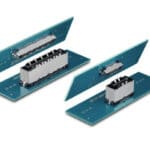
Cable backplanes have been a longtime feature of high-performance computing, undergoing several evolutions to keep up with speed and bandwidth requirements. However, as next-generation AI computing systems take hold, the practical limits of copper have been reached, pushing connector suppliers to create products that include optical solutions. Traditional backplane and daughtercard design has been aRead More


The Current and Future Role of Phase Matched Cable Assemblies

Simply put, these assemblies ensure the timing of signals so they function together, not against each other. This synchronization is essential in all applications where signal integrity and accuracy are critical. What are phase-matched cable assemblies? Phase-matched cable assemblies are a set of precisely manufactured and tested RF cables with the identical electrical length (phaseRead More

Harwin Report: Insights from Connector Buyers & Specifiers

Harwin shares key findings from its exclusive 2025 survey of connector specifiers and buyers from across the United States. The work is an important first step in understanding who is buying connectors and how manufacturers can better serve them. Harwin’s Vice President of Marketing Peter Schneid joined the company—and the connector industry—four years ago. ComingRead More

What are Ribbon (Flat) Cables?

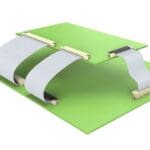
Meet the Cable: Ribbon or Flat Cable Ribbon cables, also known as flat or planar cables, feature a row of conductive wires running in parallel within a wide, flat, ribbon-shaped cable substrate. Ribbon cable can be folded and bent, providing great design flexibility. The ribbon cable was invented in 1956 by the Cicoil Corporation (aRead More

Connectivity Advances Naval Shipboard Electronics

Around the world, maritime vessel design is expanding to include new operational and battlefront technologies. These systems require compatible interconnects with high-speed performance, high-reliability, and the ruggedization features required to endure a military environment. Around the world, military vessels are undergoing rapid modernization as traditional naval shipboard systems expand to support recent developments in maritimeRead More

Flexible Alternatives to Semi-Rigid Cable Assemblies

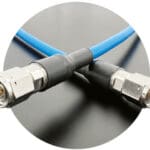
As system complexity increases and space constraints tighten, a more adaptable solution has become necessary — without compromising the critical electrical performance requirements that make semi-rigid cables the current standard. In the demanding environments of aerospace, defense, and telecommunications systems, reliability is not just desirable, it’s essential. For decades, semi-rigid coaxial cable assemblies have beenRead More

What are MIL-STD-1760-Compliant Connectors?

Meet the Connector: MIL-STD-1760-compliant Connectors MIL-STD-1760 is a military standard developed in the 1980s out of a need to standardize weapon interface and integration requirements in military aircraft. It defines requirements for electrical connectors that establish a cross-platform interface between the aircraft and its weapons systems, as well as with other stores such as equipment pods.Read More

Challenges of E-mobility Connectivity: Q&A

High power applications require innovative connectivity solutions that address battery performance, battery health, and safety. We asked Shakib Shaikh, product marketing manager-North America, and Swapnil Bhale, lead engineer-new product development at Amphenol Communications Solutions, how connectors contribute to the performance, health, and safety of battery management systems (BMS) in e-mobility applications. What do design engineersRead More

Connecting Automotive Infotainment Systems

Modern automotive infotainment systems are designed to make driving safer, more convenient, and more enjoyable for drivers and passengers. Automation, AI, IoT, and driverless vehicles are playing significant roles in the development of advanced automotive infotainment systems. Compact, high-speed connectivity solutions that not only have high bandwidth and low latency, but also simplify assembly andRead More

What are Blade Connectors?

Blade-type connectors handle high power loads with flat, durable conductive terminal blades. Meet the Connector: Blade Connectors  Also referred to as blade-type contacts, blade-type connectors are characterized by flat, conductive, blade-shaped terminals. Blade terminals are an early and ubiquitous connectivity design and are widely favored for their ease of use and power handling ability. TheRead More

Connector Suppliers Invest in DC Power Facilities

A growing number of electronics companies are investing in efficient new buildings that integrate DC power networks for resiliency, energy savings, and smart systems integration. Not only do they reap the benefits, but they also gain firsthand experience to share with customers. From office buildings to data centers, new buildings are tapping into DC power.Read More

Robust and Reliable Connectors for Residential Energy Storage Systems

Residential energy storage systems (RESS) are one of the growing ways to realize this vision. Designed for use in homes, a RESS stores excess energy generated by renewable sources, such as solar panels, for use on demand when a residence needs it. The All Electric Society (AES) envisions a world where renewable electrical energy isRead More

2026 World Connector Market Handbook 2025-2031F
x