Three Companies, One Mission: Reduce Plastics in Electronic Connectors
The search for a regenerative bioplastic is on! Connector companies partner with a biomaterial specialist to find a viable alternative to petroleum-based plastics for the electronics industry and beyond.
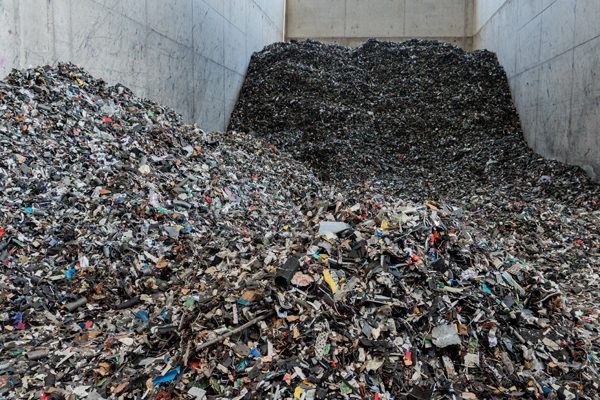
Connector manufacturers Harwin and Nicomatic have teamed up with biomaterial innovation specialist The New Materialist to develop bio-based alternatives to petrochemical plastics. Their mission, the Nivora initiative, is to tackle the daunting problem of thousands of tons of plastics, such as polyphenylene sulfide (PPS) and polybutylene terephthalate (PBT), that are produced each year for connector housings.
The key players in the project are Sam Bennett, head of product management at Harwin; Rowan Collins-Powney, project manager at Harwin; Claude Chiffard, innovation and prospective director at Nicomatic; Alexandre Frere, the engineer in charge of sustainability at Nicomatic; Thomas Vailly and Baptiste Arribe, founders of the New Materialist. “Nivora brings together the expertise that we have as a group to create a new alternative to traditional plastics and drive a more sustainable future within the electronics industry,” said Sam.
In 2025 approximately 1.2 billion connectors were shipped worldwide, and that number is forecast to reach 1.8 billion by 2028. Production generates waste material and the connectors that are used in products and equipment eventually become part of the e-waste stream after their useful life, contributing to plastic pollution. E-waste is expected to hit 82 million tons per year by 2023. To significantly impact the connector market requires finding the materials that meet sustainability goals while also addressing issues of high performance and high reliability.
The owners of Harwin and Nicomatic initiated the venture and the collaboration grew out of the current project teams’ shared ambition to explore sustainability initiatives within their companies and in the industry. “We recognized that we had that common goal. We wanted to work together to address the many challenges and find a way to reduce the use of petrochemical-based plastics in the electronics industry,” said Sam. “Shortly after that, the Nivora idea was born. Two years in, the partnership between Nicomatic and Harwin has only gotten stronger. Once we had agreed that the focus of our sustainability goals would be materials, we onboarded The New Materialist as our third partner.” Claude went on to say, “This project is extraordinary because it brings together competitors who trust one another to venture into the unknown, take risks, and take actions without any guarantee of success. We don’t know how far this project will take us, but we will do everything we can to ensure it has a positive impact on the industry.”
The collaboration works because the entities share everything. “We discuss the project weekly. We all work on the tasks, and when someone has added value, we share the results,” said Alexandre. “This is the main point of the Nivora project because the task of reducing the environmental impact of the plastic and polymers is greater than each of our companies; it is common to all industries. There is no competition between us on this topic. This is not common in the industry, but we have a lot to share and together we are going further.”
Sam explained that from the start they’ve jointly defined the purpose of the project. “Where we want to be short term and long term, setting the technical direction of the project to perform R&D and iterative development on new materials, establishing the roadmap for our supply chain and prospects moving forwards, and determining performance targets, acceptance criteria, and use cases. We are involved with the full project scope — the whole process, the goals, and the outcomes. Harwin and Nicomatic don’t perform technical testing, but we oversee it as part of the process.”
Finding the best candidates to replace petrochemical polymers
“The first goal was to determine the best combination of biopolymer base and bio-sourced and biodegradable additives to use in this new plastic,” said Alexandre. The best ones on paper were chosen and now, along with a lab, they are working on the recipe for this new polymer. “We are testing it now, in order to compare the new biopolymer against the specification from our customer and determine if it will fit that specification and be able to be part of our connectors,” he added.
To find the right polymer, the team prioritized certain criteria. “We’re working on several recipes to find and establish the best fit for the broader needs of the applications, the performance characteristics of the connector market, and the expectations that we need to satisfy the customers,” Sam said. “This is not an overnight project. Our long-term goal is to, of course, have a material product in the market and to drive a broader shift to more sustainable bio-based material alternatives, to really push for a more sustainable electronics industry and beyond. The wider goal is more than just the project. It’s an industry-wide goal that we hope to achieve through Nivora.”
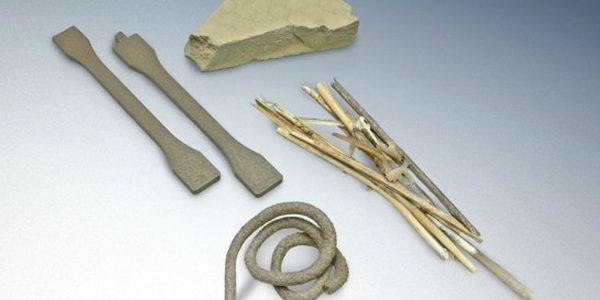
In addition to benefiting industry, one of Nivora’s key goals is to benefit the environment. “We want to develop regenerative materials that give back to their sources and ecosystems,” said Rowan. “That’s one of the key long-term goals. We won’t be taking from sources that aren’t renewable. Part of this project is a full lifecycle analysis of the landscape to make sure that whatever we are using long-term would not have any negative impact on the area or the people and would be as clean as possible.”
Customers are beginning to engage on this topic as well. “As we progress, customer input will become more and more crucial for the success of the project. There’s a drive toward sustainable supply chains with regards to the materials used, the human element, reporting requirements, and the sustainability targets and goals of larger corporate companies as well. That effectively flows through the full supply chain,” said Sam. “Beyond that, there is more legislation being passed, particularly in the EU and the UK, so we’re effectively considering that — not just as part of our own sustainability efforts, but that of the customers over time.”
Some customers are already asking for local sourcing options and have more questions about the supply chain from an economic as well as an environmental perspective. “A product or a polymer like the Nivora one could be an answer to these concerns. They want to make sure that the supply chain is strong. If we have something local, we can certify that we are going to produce or supply something that won’t be out of stock, for example,” Alexandre said.
The partners in the Nivora project operate on the shared philosophy of “building with, rather than against.” This applies to both their open collaboration and their goal of working with the natural environment rather than against it. “This project is totally new. It does not exist in the market, even in another industry. We are quite lucky to have our companies putting resources into this project because it’s a little bit of try and failure. But along the way, step by step, we are seeing great improvements,” said Alexandre. From his perspective, the big picture is finding the polymers that fit all the connector specifications for performance, reliability, and ruggedness and will also be useful in other industries. “The task is greater than just the connector industry, and the results could be beneficial for everybody. Going sustainable is no longer an option…It is the solution,” he added.
To learn more about the connector companies mentioned in this article, visit the Preferred Supplier pages for Harwin and Nicomatic.
Like this article? Check out our other articles on our Wire and Cable Assemblies Market Page, and our 2026 Article Archive.
Subscribe to our weekly e-newsletters, follow us on LinkedIn, Twitter, and Facebook, and check out our eBook archives for more applicable, expert-informed connectivity content.

- ODVA Embraces ix Industrial - September 22, 2026
- PCB Connectors Product Roundup - September 22, 2026
- Safety First: Preventing EMI in Medical Devices - September 15, 2026