Mil/Aero Articles

Extreme Temperature Innovations for Aerospace and Defense

One of the greatest engineering challenges facing military and aerospace systems is extreme temperature. Connectors must withstand severe heat and cold, as well as sudden temperature changes and other harsh conditions, while maintaining electrical integrity throughout the mission. For decades, aerospace and defense systems have been required to operate in some of the harshest environmentsRead More


5 Key Benefits of Modular Connector Platforms in High-Speed Aerospace Applications

Connector modularity lets engineers dynamically scale SWaP requirements to their needs while maximizing maintainability through field serviceability. Article Contributed By Clint Schlosser, Product Manager, Winchester Interconnect For the emerging small-satellite industry servicing LEO constellations as well as the UAS sector, development teams are often faced with two competing goals: designing to highly demanding performance specificationsRead More

What is a MIL-DTL-28748 Connector?

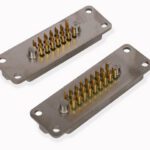
MIL-DTL-28748 (formerly MIL-C-28748) is a U.S. military specification that defines rectangular, rack-and-panel electrical connectors with non-removable solder-type contacts or removable crimp-type contacts. It is commonly specified for airborne, ground-support, and shipboard equipment as a compact, high-contact-density, multi-source connector interface that is already proven for severe-environment military and aerospace use. Technical Standard MIL-DTL-28748 was first issuedRead More

COM-HPC 1.3 Takes Computing to the Intelligent Edge

To increase functionality at the edge of the network requires more compute power, higher speeds, and higher I/O, to support more memory, especially with IoT and AI. The original COM-HPC® specification was released by PICMG (PCI Industrial Computer Manufacturers Group) in 2021 to meet the evolving demands of embedded computing. COM-HPC 1.3 is the thirdRead More

Engineering’s Future is AI-Inspired, Human-Led

For many organizations, AI is now starting to move beyond early-stage experimentation and into the realm of quantifiable value creation. Article Contributed By Megan Lampinen, automotive technology writer and future mobility specialist, for TE Connectivity Artificial intelligence is reshaping the global innovation landscape, speeding up the pace of development while improving product quality and operationalRead More

How High-Reliability Connectors Meet the Demands of Satellite Engineering

Satellites must be designed to endure conditions from launch to the complex space environment. High-reliability connectors help these systems operate in various extreme conditions. Article Contributed By iConnexion Spacecraft electronics are held to a standard that few terrestrial systems ever face: years of unattended operation, no possibility of repair, and an environment that actively worksRead More

What is a Speed Sensor?

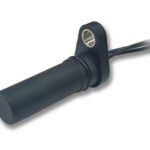
A speed sensor is an interconnect device that detects the rotational or linear velocity of a moving component and converts that motion into an electrical signal with a frequency or pulse rate that is proportional to speed. The two dominant speed sensor types are variable reluctance (VR) sensors, which generate a self-powered analog signal asRead More

Semi-Rigid Cables are Reliable in Harsh Mil/Aero Environments

Their combination of unique characteristics offers advantages from rugged construction to signal integrity to saving space. Military and aerospace applications often rely on uncompromised signal transmission in challenging environments, making cable selection a high priority. Semi-rigid cables have multiple features that make them an ideal choice. In addition to their solid construction and high reliability,Read More

Fortifying Connectivity: The Essential Role of Ruggedized Connectors in Extreme Applications

Connectivity is crucial for the seamless operation of technologies in industries that operate under extreme conditions. A harsh environment is typically defined by factors such as extreme temperatures, high humidity, corrosive substances, excessive dust, and significant vibration. These conditions can severely impact the performance and longevity of electronic components, making ruggedized connectors essential. Article ContributedRead More

What is an Elastomeric Connector?

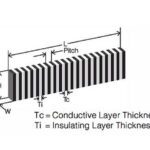
Elastomeric connectors are used wherever a solder-free, zero-insertion-force interface is needed between a PCB and a flat or fragile substrate.  Elastomeric Connectors (also known as ZEBRA connectors) feature alternating, parallel layers of electrically conductive and non-conductive silicone elastomer. The elastomeric connector was invented by Joseph Asscher in the early 1970s by Elastomeric Technologies Inc. (ETI)Read More

2026 World Connector Market Handbook 2025-2031F
x