Efficiency May Be The Ultimate Solution To AI Data Center Challenges
As AI focused data centers continue to grow in size and complexity, these headwinds could introduce roadblocks that bog down the incredible rate of advancement putting the U.S. behind in the race to AI superiority.
The top priority for articles and reports I have written for Bishop & Associates over the past 24 years has been technical accuracy. Although I am a product of the electronic connector industry, articles must be supplier agnostic and based on extensive research and personal interviews with informed sources without conjecture. This article will be a departure from that mandate.
I think it important that a source of information provides full disclosure of experience and expertise in the subject matter. I have spent over 50 years in the electronic connector industry in a variety of roles. As a teenager I could spend hours poring over the latest Allied Electronics component catalog and priding myself on assembling several pieces of Heathkit and Allied Radio vacuum tube audio equipment. I understood Ohm’s Law long before I learned how to compose a grammatically correct sentence. Although my degree was in electronics technology, I have never designed a production circuit. I was fortunate to have been weaned on the principles of contact physics by Dr. Jim Whitle and Dr. Robert Mroczkowski and signal integrity by some of the pioneers in the field including Robert Cutler and Ken Wratten. This was at a time when data rates began to exceed 50 MHz. More recently, I have been tracking the ongoing transition from copper to fiber transmission. I have watched our industry experience multiple bubbles and subsequent busts that in retrospect only resulted in tiny blips on the incredible growth curve of the electronics market. This is the perspective I am applying to the phenomenon that is artificial intelligence.
Over the last 5 years, artificial intelligence (AI) has become the engine that is driving unprecedented investment and technical advances in high-performance computing. An international race to achieve AI superiority has formed with the United States and China emerging as top contenders. Key component suppliers such as Nvidia have made many of their investors fabulously wealthy over the past three years selling ever more powerful graphic processing units. Nvidia recently announced a deal with six large Wall Street firms to raise more than $500 billion available to fund datacenters, chip foundries and energy sources needed to continue fueling the artificial intelligence boom. Leading AI players have estimated that spending on AI buildouts will surpass $730 billion in 2026. The rate of growth, technical advances, and unprecedented investment are currently raising alarms among investors that an AI boom is nearing an inevitable breaking point. Despite the many talking heads that are either proclaiming the dawn of an incredible new world or warning of existential doom, the long-term impact of AI is still up for debate.
In my opinion, AI technology is in the very early stages of altering the basic relationship between humans and work. Unlike past disruptive innovations, when specific classes of workers and devices were displaced, AI will likely impact everyone from the common laborer to top executive. One of the questions yet to be resolved is will AI be theagent for the transformative revolution that is being promised and how will quantum computing play in the mix of technologies?
At this point in time, it appears that there are two significantly different approaches to building and training the AI models required to support the spiraling demand for AI services.
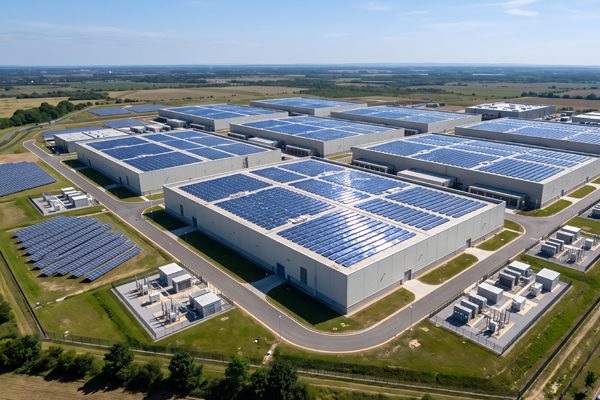
One is to create huge models that may consist of hundreds of billions of parameters that require ever larger hyperscale computing clusters using the most advanced GPUs, central processing units, and switches increasingly linked using high-speed optical fibers. Hyperscale datacenters require extreme bandwidth, massive interconnect, and incredible levels of electrical power. These data centers contain equipment racks in buildings measured in acres, utilizing tens of thousands of high-performance GPUs and miles of cabling. Data center capacity is now being rated in electrical consumption that can run to gigawatts. The furious wave of new data center infrastructure has been a boon to suppliers that range from optical networking equipment to large earthmoving equipment. The momentum of AI infrastructure construction has remained strong over the past three years with no apparent end in sight. Key players both domestic and foreign in this race are vying for leadership positions with FoFB (fear of falling behind) a constant spur to continued investment. This approach has been successful in advancing AI technology as well as supporting an increasing number of practical applications. At the same time, the massive scale of these installations has begun to experience blowback from multiple corners.
The challenges are beginning to impact the financing, location, and construction of new data centers. Specifically;
- The energy required to support a new AI data center has begun pushing the capacity of the existing power distribution grid. Amazon, for instance, is spending $11 billion to build a massive data center campus on a 1,200-acre site in Indiana that is projected to consume 2.2 gigawatts of electricity. Utility companies have begun implementing long-overdue upgrades, but the cost will likely result in higher energy bills for all consumers. The nation’s largest electrical grid operator recently estimated that new data centers will add billions of dollars of additional charges to customers over the next three years.
- System packaging of AI systems has increased the rack density of power-hungry devices. Placing advanced chips in close proximity reduces signal delay and power consumption but makes keeping device temperatures within safe operating conditions more difficult. Traditional fan cooled racks are being replaced by liquid cooling using cold plate technology, which will likely evolve to full immersion cooling technology in the future. Some liquid cooling systems use chilled water, which can stress local water supplies.
- Critical components, including memory chips, are in unprecedented demand by new data centers with some suppliers reporting triple digit growth. This has significantly increased the lead time and price of commodity chips and impacted availability of chips used in markets that range from automotive to consumer electronics, resulting in increased product retail prices. The cost of memory content in an Apple iPhone increased from 10% to 34% in one year, forcing Apple to increase the price of its phones.
- The physical size of new data centers raises questions about how the extreme complexity of these systems impacts reliability, and the result of failure to their users.
- Data centers are under pressure to adopt environmental and sustainability measures, adding cost and delay to construction. Questions are being raised about the environmental impact of new data centers, especially related to the emissions of on-site natural gas and diesel backup generators.
- Increasing land values have added to the cost of desirable AI sites. Building a large AI data center is a highly leveraged venture. The current uncertain economic conditions have delayed anticipated interest rate reductions making construction riskier.
- Connectivity and cable management requirements that range from co-packaged optic switches to linking campus AI computers could require tens of thousands of optical fibers, raising bulk cable management, fiber identification, and repair issues.
- The growth rate of AI data centers has been phenomenal and increasing with hundreds of billions of dollars being invested by a relatively small number of global players. Achieving increased AI capacity and performance is what drives this spectacular level of investment and raises questions if AI proves to be less of a transformative technology than currently anticipated. Reports of double booking of AI components have already appeared. If an AI bubble were to burst, those orders would quickly disappear, putting the industry and possibly the entire economy in a recession.
The result of these concerns has been pushback from local residents, community leaders, as well as state government in the form of moratoriums on new data center construction. Some of these issues revolve around “not in my backyard” or the result of misinformation. Warnings about rogue AI from industry pundits has made people uneasy about where the technology could lead. Cities and counties that had previously offered tax incentives have turned to outright bans on new data centers. A recent poll indicated more than 50% of Americans now support a national ban on data center construction, a serious PR problem for AI data center owners. Public consent is becoming a significant bottleneck equal to the technical challenges faced by the industry.
As AI focused data centers continue to grow in size and complexity, these headwinds could introduce roadblocks that bog down the incredible rate of advancement, putting the U.S. behind in the race to AI superiority.
But what if models could be designed to process a much smaller, more efficient set of parameters while providing similar results?
An alternative approach to creating AI models focuses on efficiency rather than massive computational capacity.
The U.S computer industry and global stock markets were shocked on January 20, 2025, when DeepSeek, a Chinese startup, introduced the first version of DeepSeek R1, a highly efficient reasoning model. Initial reports indicated that the DeepSeek AI model can be trained and complete tasks in a fraction of the time and computing resources required by American models. Rather than manipulate the total number of parameters in a model, the DeepSeek model activates only a much smaller subset of parameters to solve a problem. The implication is that image, language, and speech models could be created and trained by smaller, less complex computers that use fewer state-of-the-art GPUs, consuming less energy and generating less heat, thereby offering lower operating costs. While the number of GPUs and network switches could be reduced, other components such as memory may need to be increased. Unlike typical models created by industry leaders including AWS, Google, Amazon, Anthropic, Open AI, and Microsoft, DeepSeek models are open source, meaning they are available at no charge and can be modified to support specific needs, a feature that has made DeepSeek models highly popular, especially in third-world countries where cost is a prime consideration.
The introduction pace of new competitive AI models is continuing to accelerate. In June 2026, Z.ai, a Chinese startup, released a low-cost, open-source AI model that is nearly as powerful as much larger Anthropic models. A month later, another Chinese startup, Moonshot AI, unveiled another low-cost, open-source model reported to reduce the performance gap between American and Chinese models. U.S. authorities worry that open-source models enable the use of distillation, a process that allows Chinese researchers to collect data from powerful models to quickly build their own models.
Using more efficient models could result in reduced run times, energy consumption, and allow the construction of smaller data centers, which could go a long way to minimizing the objections being leveled against the current wave of hyperscale data centers now being built in the U.S. These new models are coming at a time when U.S. data center owners are being driven to find ways to reduce their operating costs and improve their return on investment. An early response to these Chinese competitive models has been the recent Meta announcement of support for open-source models. Meta released an open-source version of its most powerful AI model Muse Spark, called Muse Glimmer, a less powerful model, but available for free.
So, there you have it, my observations and opinions of the nascent race to AI superiority. I am concerned that as efficiency becomes a critical factor in next-generation AI models, and the performance of open-source models continues to improve, the behemoth AI data centers now being built may quickly become dinosaurs. Component manufacturers, including those that make copper and fiber optic connectors, will see the end of the current exceptional string of sales growth years. AI will go on to be a transformative technology but will be enabled by technology perfected and commercialized in countries other than the Unted States.
I am confident that AI is here to stay, and similar to the introduction of the internet, it has incredible potential to improve the human lot. I also believe that the escalating rate of energy consumption is unsustainable and must be curtailed for computers to deliver on the promise of AI. Next-generation systems will feature efficiency that starts with the architecture of the individual chip and includes every aspect of internal and external connectivity. Advanced software techniques, including distillation, will also contribute to avoiding performance walls that currently plague current system design.
Like this article? Check out our other articles on Artificial Intelligence, our Consumer Market Page, and our 2026 Article Archives.
Subscribe to our weekly e-newsletters, follow us on LinkedIn, Twitter, and Facebook, and check out our eBook archives for more applicable, expert-informed connectivity content.

- Efficiency May Be The Ultimate Solution To AI Data Center Challenges - November 10, 2026
- The Power of Having Options - September 15, 2026
- XPO, Addressing the I/O Panel Bottleneck - June 30, 2026