Featured Articles
  • What is an Ultra-High-Density Connector?

    Ultra-high-density (UHD) connectors are specialized, compact interconnects designed to pack a maximum number of signal or power contacts into a minimal footprint, typically to save space without compromising performance. They feature a low profile, a high pin count, fine pitch, and, often, enhanced EMI shielding. These connectors are crucial for reducing PCB size and supportingRead More

  • Derating Curves for Connectors

    The current carrying capacity of a connector is not a fixed absolute value; it is always the result of a thermal consideration. Since insulating materials, contact springs, and plating systems are specified only up to a certain temperature limit, the permissible current must be reduced as the ambient temperature increases. This relationship is exactly whatRead More

Learning Tools

What are Terminals?

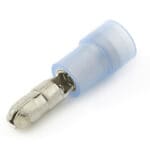
Meet the Connector: Terminals A terminal is the conductive element that provides an electrical contact point that enables electricity to flow through an electrical circuit. At its most basic level, a terminal is simply a conductive bare wire that is secured through crimping or soldering, often to a terminal block. However, the word terminal isRead More

Signal Integrity: More Important than Ever

The process of ensuring signal integrity is not a precise science. Even the tiniest nuance anywhere along a channel can cause reflections, crosstalk, or prohibited levels of emitted radiation. A long time ago in a galaxy far, far away, designers of high-speed digital circuits could quickly verify performance by building a physical “breadboard” prototype. EngineersRead More

What are MIL-C-24231 Connectors?

Meet the Connector: MIL-C-24231 Connectors MIL-C-24231 specifies standards for the design, manufacturing, and testing of electrical connectors and related components for use in applications where pressure and water ingress are significant concerns, such as harsh underwater environments. MIL-C-24231 is a Navy specification that covers pressure-proof single and multiple cable connectors, plugs, receptacles, adapters, hull inserts,Read More

Electronics vs. the Elements: Mitigating Risk in Harsh Environments

This article is included in Connector Supplier’s latest e-Book, Braving the Elements, a compilation of expert insights into overcoming the performance obstacles electronics face every day in increasingly challenging environments. Download your free copy here.  Manufacturers use the IP rating system to describe the level of protection that their equipment can deliver. IP ratings haveRead More

What are SAS Connectors?

Meet the Connector: SAS Connectors SAS connectors are used for high-speed, reliable data transfer in high-speed storage applications. SAS connectors are rectangular connectors used for high-speed, reliable data transfer in high-speed storage applications. SAS supports both serial and parallel communication and can be backward compatible with SAS 1.0 and 2.0 devices. SAS is a point-to-pointRead More

What are Motion Sensors?

Meet the Sensor: Motion Sensors Motion sensors are integrated into electronic devices to detect movement within a specified area. Within a connected system, these sensors can activate an alert or initiate a task sequence in response to that motion. They are widely used in industrial equipment, smart lighting equipment, home or building controls, videogame equipment,Read More

What are PCB-Mount Antennas?

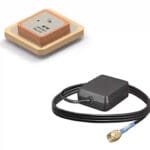
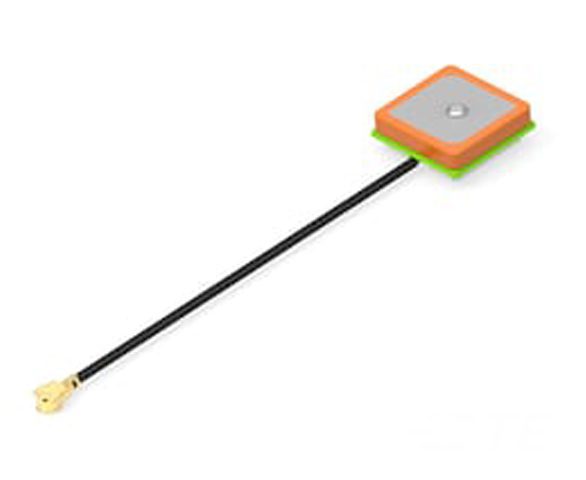
Meet the Antenna: PCB-mount Antennas PCB-mount antennas are integrated directly into a PCB (printed circuit board). Rather than attaching to the PCB as a separate component, the antenna structure is part of the PCB itself. This makes the antenna less susceptible to damage compared to external antennas. Wireless communication applications such as IoT devices, wirelessRead More

What is Subsea Cable?

Meet the Cable: Subsea Cables  Subsea cables (also called submarine cables) are specialized, highly ruggedized fiber optic cables that cross the seabed between land-based stations to carry telecommunications signals. They are the backbone of global internet and data communications and transmit data such as internet traffic, telephone calls, and private data. Subsea optical cables carryRead More

What are Disposable Connectors?

Meet the Connector: Disposable Connectors Disposable single-use and limited-reuse connectors must do the same job as reusable versions, but cost, functionality, and environmental impact play a bigger role in their design. Disposables are largely used in medical applications to maximize patient safety by preventing cross-contamination and infection. They are also used in food processing, researchRead More

What are Ribbon (Flat) Cables?

Meet the Cable: Ribbon or Flat Cable Ribbon cables, also known as flat or planar cables, feature a row of conductive wires running in parallel within a wide, flat, ribbon-shaped cable substrate. Ribbon cable can be folded and bent, providing great design flexibility. The ribbon cable was invented in 1956 by the Cicoil Corporation (aRead More

What are MIL-STD-1760-Compliant Connectors?

Meet the Connector: MIL-STD-1760-compliant Connectors MIL-STD-1760 is a military standard developed in the 1980s out of a need to standardize weapon interface and integration requirements in military aircraft. It defines requirements for electrical connectors that establish a cross-platform interface between the aircraft and its weapons systems, as well as with other stores such as equipment pods.Read More

Remote Towers Rely on Heavy-Duty Connectors – A Case Study

Ruggedized, heavy-duty connectors are an essential element in remote tower installations. The structure and its electronics must be able to endure continuous outdoor environmental conditions. Heavy-duty connectivity solutions are an essential part of successful outdoor communications infrastructure. Tower Solutions, located in Pine City, Minnesota, a manufacturer of mobile tower platforms for surveillance, communications, tactical support,Read More

2026 World Connector Market Handbook 2025-2031F
x