Meet the Connector

FFC Vs. FPC Connectors: Which is Right For You?

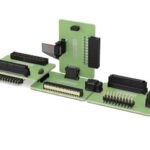
Meet the Connector: FFC/FPC Connectors FFC connectors are used to mate ribbon-type flat flexible cables (FFCs) to PCB circuitry in cable-to-board applications. They are also available in cable-to-cable configurations. These connectors have a high-density, very narrow form factor and fit in tight spaces. They are commonly used in consumer applications such as laptops, cameras, computerRead More

What are Wire-to-Board Connectors?

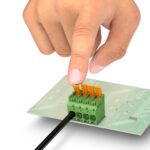
Meet the Connector: Wire-to-Board Connectors Wire-to-board connectors bring power and signal to a printed circuit board (PCB) by connecting a group of discrete wires to the board. There are no standard wire-to-board connectors; the various types are specific to the manufacturers who produce them. Wire-to-board connectors can be specified based on several features. These includeRead More

What are Coaxial Connectors and How do They Work?

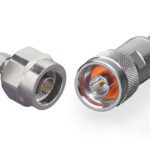
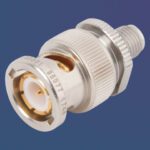
Meet the Connector: Coaxial  Connectors (Note: This article focuses on cable-to-cable and cable-to-panel applications.)  A coaxial connector has an inner conductor that is enveloped by a concentric conducting sleeve, with the conductor and shield separated by an insulating material; hence the term “coax” or “coaxial” connector. (Not all RF [radio frequency] connectors are coax, butRead More

What are RAST Connectors?

Meet the Connector: RAST Connectors RAST connectors are an international standard originally developed for the home appliances market. The initial design featured a crimp-style contact, but today most iterations employ insulation displacement contact (IDC) technology, which simplifies the installation process, eliminates mis-mating errors, and improves connection quality by eliminating the need to cut, strip, andRead More

What are MIL-PRF-28876 Connectors?

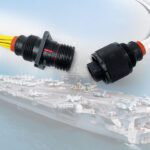
Meet the Connector: MIL-PRF-28876 Connectors MIL-PRF-28876 connectors, also known as M28876s, are military standard fiber optic circular connectors used in rugged naval applications where reliability, sealing, durability, and a secure latch are essential to performance in harsh environment conditions. They are widely used by the U.S. Navy and Allied forces for shipboard technologies. The MIL-PRF-28876Read More

What are Inline Splice Connectors?

Meet the Connector: Inline Splice Connectors  Inline splice connectors are used to connect two physical cables or to split an existing cable into two separate entities while maintaining signal continuity between them. Inline splices are designed to provide a quick and efficient solution to customer wiring requirements.  Single and dual wire splices meet MIL-T-81714 requirementsRead More

What are Pogo Pins (Spring-Loaded Pins)?

Meet the Connector: Pogo Pins (Spring-Loaded Pins) Pogo pins, also called spring-loaded pins, are electrical connector mechanisms known for their durability and ability to provide an electrical connection that is resilient to mechanical shock and vibration. Pogo pins are widely used in a variety of electronic applications and in the Test & Measurement industry. TheRead More

What are 3-Pin Connectors?

Meet the Connector: 3-Pin Connectors While many connectors feature a configuration with three pins, the term 3-pin connector is often used to refer to a simple white nylon pin receptacle with three tin contacts that is typically used in small, low-power computing products, most notably computer fans. The connector and its contacts can be purchasedRead More

What are Configurable Connector Systems?

Meet the Connector: Configurable Connector Systems Configurable connector systems, also called build-your-own, semi-custom, or modular connectors (not to be confused with modular RJ45s), are available from many suppliers as an alternative to costly fully custom connector products. In cases in which an existing connector is close, but not quite right for a particular application, theseRead More

What are SMP Connectors?

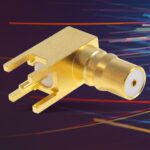
Meet the Connector: SMP Connectors Subminiature push-on (SMP) connectors are highly shielded, very small interconnects commonly used in miniaturized high frequency coaxial modules and high data rate applications such as antennas, broadband installations, Test & Measurement, and quantum computing. The product was developed by Gilbert (now Corning Gilbert) in the late 1980s and marketed asRead More

What is an EV Charging Connector?

Meet the Connector: EV Charging Connectors EV charging connectors are used to charge electric vehicles. They connect the vehicle to charging infrastructure, whether that be a “pump” type charger or a suitable high-voltage outlet in a building. The plug end (or male connector) delivers power from an electricity source to the port end/inlet (or femaleRead More

What are Interposers?

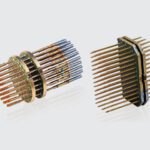
Meet the Connector: Interposers Interposers, or interposer connectors, are compression-mounted interconnect devices that are positioned between boards or sockets to allow an electrical signal to pass through very quickly. They have a wider pitch than a traditional connector, thus enabling the easy rerouting of connections, and provide designers with a flexible, removeable interface. The wideRead More

2026 World Connector Market Handbook 2025-2031F
x