Meet the Connector

What Is an RFID Antenna?

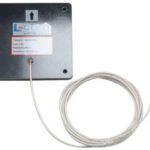
The RFID antenna is the radiating element that links an RFID reader to passive or active tags. It reaches the rest of the system through an RF interface, most often a 50 Ω reverse-polarity TNC (RP-TNC) coaxial connector on fixed UHF readers. This component operates anywhere from 125 kHz to 5.8 GHz, and is mostRead More
What is a Data Bus?

This communication architecture allows for the smooth exchange of data inside a computer, or occasionally between different systems, components, and applications. A data bus is the set of connections within the CPU, memory, and peripherals used to carry data and is one of the main factors in a computer’s processing power. It consists of hardwareRead More

What is an Antenna Connector?

Antenna connectors are specialized RF coaxial connectors used to link antennas to coaxial or RF cables that connect to an electronic device such as a router, radio, transceiver, television, or wireless infrastructure. They are used in Wi-Fi and IoT devices, GNSS and navigation, aerospace and defense, and automotive systems. They carry radio-frequency signals through aRead More

What is a Solid-State Lighting Connector?

Solid-state lighting (SSL) connectors are interconnects developed for LED (and OLED) illumination products. DigiKey described these products this way: “Products in the solid-state lighting connector family are interconnect products designed and marketed with particular focus on the needs of LED-based illumination applications. In general, this implies a focus on low product and assembly costs, predominantlyRead More

What is an Ultrasound Cable Assembly?

An ultrasound cable is a multi-conductor micro-coaxial cable assembly that links an ultrasound transducer or probe to the imaging system. It carries dozens to hundreds of individually shielded signal channels between the transducer array and the console. These assemblies are typically custom-built per probe and imaging-system platform, with channel count, conductor gauge, and connectors specifiedRead More

What is a Power Cable?

Power cables are used in the transmission of electrical energy to, for example, run a motor, light a bulb, or charge a battery. In the power industry, power cables are categorized as high-tension (designed for higher voltages to carry bulk electrical power to substations), or low-tension cables (low voltage for final local distribution of electricityRead More

What Is a Photovoltaic (PV) Connector?

A photovoltaic (PV) connector is a single-pole, weatherproof, quick-connect DC electrical connector used to join solar modules into strings and link those strings to combiner boxes, inverters, and other balance-of-system equipment. PV connectors are built to survive decades of outdoor exposure at up to 1500 V DC with ruggedized, IP67/IP68 sealing. They are used onRead More

What is an FMLB Connector?

A first mate-last break (FMLB) connector is an electrical connector engineered so the ground contact connects before any other pins when mating and disconnects after all other pins when unmating. According to Mill-Max, this ensures that the ground path is established before any other power or signal connections are made, eliminating stray currents that canRead More

What is a Manual Service Disconnect (MSD) Connector?

A manual service disconnect (MSD) connector is a removable, touch-safe high-voltage connector used to manually break the electrical circuit of an electric or hybrid vehicle’s battery pack. It meets the performance requirements of SAE/USCAR-2 and its high-voltage supplement, USCAR-37. Technicians, first responders, and tow operators pull the MSD before servicing a 60–800V system so thatRead More

What is a Cable Tie?

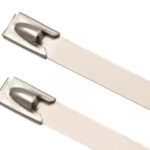
A cable tie (also called zip tie, wire tie, or tie-wrap) is a simple engineered fastener commonly used in electronics. It consists of a strap with a row of teeth (a ratchet) on one face and a small housing at one end. When the tail is threaded through the housing, or head, and pulled snug,Read More

What is a MIL-DTL-28748 Connector?

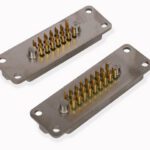
MIL-DTL-28748 (formerly MIL-C-28748) is a U.S. military specification that defines rectangular, rack-and-panel electrical connectors with non-removable solder-type contacts or removable crimp-type contacts. It is commonly specified for airborne, ground-support, and shipboard equipment as a compact, high-contact-density, multi-source connector interface that is already proven for severe-environment military and aerospace use. Technical Standard MIL-DTL-28748 was first issuedRead More

What is a PBOF Interconnect?

Pressure-balanced oil-filled (PBOF) interconnects are specialized electrical and fiber optic connectors and cable assemblies designed to survive and operate reliably in extreme, high-pressure deep-sea or subsea environments. Flexible elastomeric tubing (the conduit for electric wires and fiber optic lines) filled with a compensating fluid, such as a non-conductive silicone oil (a dielectric and pressure compensator),Read More

Analysis of the World’s Top 100 Electronic Connector Manufacturers
x