Month: February 2014

VITA Specifications: Setting the Standard

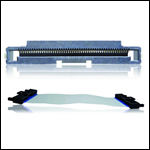
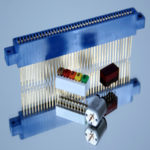
The VITA specifications enable the embedded computer industry to support military, avionic, space, instrumentation, semiconductor processing, medical imaging, and industrial control applications. The way industry standards are often viewed by the engineering community has been the source of jokes for many years: How many engineers does it take to change a light bulb? None, they simplyRead More
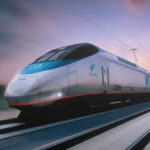
Facts & Figures for the Global Rail Industry Market

The global rail industry market for connectors is expected to yield an 8.0% CAGR through 2018, growing to an annual volume of $828.8 million. Europe, the largest component of the global rail industry market segment, with 48.8% of the total market, is repositioning itself for consistent expansion into its 2020 plan and beyond. A freeRead More

Connector Technology Highlights from DesignCon

Bob Hult reports on the connector technology highlights from DesignCon, especially the race to 100+Gb/s. The DesignCon 2014 conference and expo once again demonstrated the event’s value as the premier showcase for high-speed chip, connector, and PCB board technology. Featuring a full schedule of well-attended technical sessions over four days, a sense of excitement andRead More

Technology Advances in the Last Decade

Technology advances in the last decade transformed the automotive, commercial, and consumer device landscape. Enabled by advances in silicon IC technology, markets and applications converged around WiFi, LTE, Bluetooth, flash memory, multicore processors, and standardized high-speed I/O interfaces. The transition from the Internet of connected people to the Internet of connected things opened up entirelyRead More

Condition-Based Maintenance Secures the Flow of Goods

High availability and the reliability of rolling stock comprise the basic requirements for modern rail freight. HARTING is researching solutions for condition-based maintenance strategies. The long history of sustained, strong growth in global trade correlates to a continued increase in the flow of goods in the future. Despite political advocacy and a broad range ofRead More

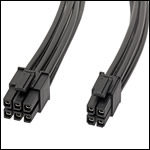
Molex Mega-Fit Power Connectors Offer High Current-Density with Small Footprint

Molex Mega-Fit power connectors deliver cutting-edge 23.0A in a 5.70mm pitch for virtually any general market application. Molex continues to build on its innovative family of power products with the Mega-Fit power connector. This wire-to-board, mid-range product line fills a significant power void in today’s interconnect marketplace by delivering 23.0A in a small 5.70mm footprint.Read More

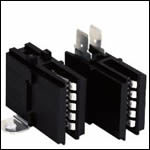
FCI BarKlip Bus Bar Connector for Direct-Pluggable Connections

FCI BarKlip bus bar connectors are rated at up to 170A and offer improved electrical performance and long-term reliability. The new FCI BarKlip bus bar connectors are specifically designed for applications requiring a direct pluggable connection to an uninsulated bus bar. The right-angle BarKlip connectors generate very low energy loss, with a maximum resistance ofRead More

Amphenol PowerBlok WTB Provides Current up to 70A

The Amphenol PowerBlok WTB connector provides a high-current single point of connection. Amphenol Industrial Products Group has expanded its line of RADSOK high-current connectors with a new power-to-board connector. PowerBlok WTB (wire-to-board), a simple and cost effective latching connector, provides a high-current single point of connection to a PCB of up to 70 A. IdealRead More

How to Specify and Select a Connector

The “Connector Basics” series from APEX Electrical Interconnection Consultants continues with a tutorial on how to specify and select a connector for a particular application. Generally speaking, electrical connectors are mechanical components that serve an electrical function. In addition to carrying electrical current at a specified voltage, connectors either enable interconnection of components during theRead More

Regenerative Braking Systems in Rail Applications

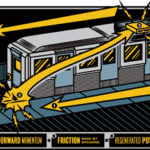
Regenerative braking systems reclaim and store kinetic energy in a reusable manner. Conventional vehicle braking systems convert kinetic energy into heat via friction, wasting a great deal of energy potential. Regenerative braking systems reclaim and store this kinetic energy in a reusable manner. More and more modern electric drive vehicles, including locomotives, boast regenerative brakingRead More

2026 World Connector Market Handbook 2025-2031F
x