

Featured Articles
  • USB-C Serves Industrial Design with Rugged Variants 

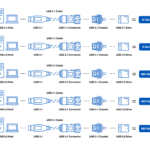
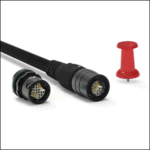
    The USB-C connector has quickly moved from consumer applications into harsh environments. With 20 Gb/s data rates and IP-rated sealed variants, this connector can handle industrial conditions and serve in controllers, robotics, and peripherals for the factory floor. A new class of rugged USB-Cs and cables elevates this ubiquitous interface. It’s been nearly two years sinceRead More

  • The Power of Having Options

    The input/output panel of AI equipment is a prime example of how evolving demands have spawned the introduction of alternative solutions that address bandwidth demand, signal density, field serviceability, energy efficiency, thermal management, and utilization of both copper and fiber optic options. Most people would agree that having multiple choices to solve a problem isRead More

Technology

iPad Pro’s Smart Connector Changes How We Communicate

Once again, Apple is changing the way we communicate. The new Smart Connector, launched in the iPad Pro last November, utilizes two-way conductive communication that creates an instant connection.   Apple’s recently released iPad Pro is changing (once again) how we communicate. The built-in 12.9-inch Retina display is not the big news. The real excitementRead More

Wireless and Photonic Integration: Putting the Pieces Together

Given consumer demand for mobile products that offer more services in real time, designers need to take advantage of the most effective technologies available – wireless and photonic.   They say oil and water don’t mix, and for the most part that is true. To some degree, the challenges associated with mixing wireless connectivity andRead More

Emerging Technology: Human-Machine Interfaces

As the Internet of Things starts to take hold, how do people engage and interact with the plethora of new connected devices? ABI Research shares an infographic that maps out the significance of current trends in human-machine interface technology.   Machines and computing solutions are increasingly prevalent in our surroundings. People need to interact withRead More

Why Connector Giants Expand into Sensors

Is it for the sake of technology advancement, broader customer appeal, or just a good business opportunity? Bishop & Associates’ David Brearley looks at why connector giants expand into sensors.    You may have noticed there have been several acquisitions of sensor companies by connector companies in recent years. TE Connectivity, for example, acquired MeasurementRead More

Tech at Work: Virtual Autopsies

Using robots and imaging technology to make autopsies more efficient and less costly may seem like a no-brainer, yet when we look at the tech at work, virtual autopsies remain controversial around the world.   Who’s afraid of a dead body? Based on the success of television shows like CSI and Bones, it looks likeRead More

2015 Connector Product and Technology Trends in Review

2015 saw great leaps forward in technology, many of which were enabled by developments in connector design and manufacture.      At some point in the future, we may look back at 2015 and recognize it as a year when key technologies came together to enable a continuing series of next-generation products. Bishop & AssociatesRead More

The Promise of Reversible USB Type-C Connectors

The new reversible USB Type-C connectors will replace existing USB types. The first PCs and related accessories that incorporate the new USB Type-C connectors are now being released. Type-C connectors are covered by the recently updated Standard USB 3.1 (April 3, 2015) from the USB Implementers Forum (USB-IF) and will be used with both hostsRead More

When is a Small Connector Too Small?

Connector companies are meeting SWaP challenges as we move to mobile and wearable devices, but is there a time or a function when tiny is too small?     Electrical connectors just keep getting smaller as companies push size and weight out of their devices. Connector companies have risen to meet the SWaP (size, weight, and power) challengesRead More

The Case for Fiber Optic Cable in Wind Turbines

Fiber optic cable may be the best way to achieve the effective monitoring and control necessary to ensure efficiency in offshore wind turbines.   One of the major challenges facing power generation from renewable energy sources is continuous and cost-effective operation. In the case of wind turbines, both offshore and onshore, this cost-effectiveness depends onRead More

Benefits of Networking Wire Processing Equipment

Once reserved for large manufacturing operations, networked wire processing equipment is poised to change how small-to-medium wiring harness shops do business, according to Schleuniger’s Pete Doyon.   Having been in the wire processing business for 30 years, I have seen a lot of changes and improvements made possible, primarily, by advances in electronics and software.Read More

What’s New with the A-620-B Standard?

IPC/WHMA A-620-B is an excellent tool for everyone involved in the building of wire harnesses because it greatly simplifies best practices for the harness supplier. The WHMA’s Donnie Hill updates us on the latest revisions to the standard.   IPC/WHMA – A-620-B is the current wire harness standard developed jointly by IPC and the Wire HarnessRead More

Analysis of the World’s Top 100 Electronic Connector Manufacturers
x