Have It Your Way: Custom Manufacturing Do’s and Don’ts
November 20, 2012 – If your application’s requirements go beyond off-the-shelf components, L-com’s Dave Fallon offers some advice for working with a custom manufacturer.
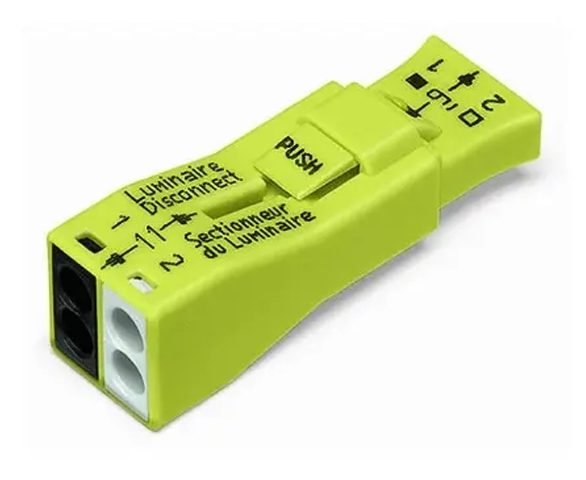
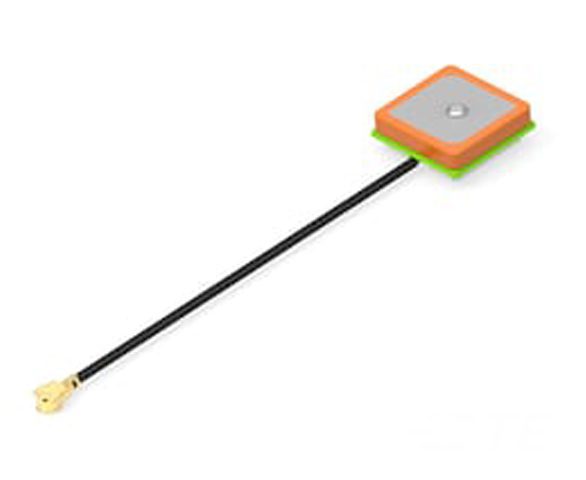
November 20, 2012 – If your application’s requirements go beyond off-the-shelf components, L-com’s Dave Fallon offers some advice for working with a custom manufacturer.
11-12-12 – Summary: A lot has changed between the early generations of surge protectors for signaling, and the versions available today. New innovations have improved the quality of protection, broadened device functionality, and made it easier for users to manage the crucially important ongoing protection.
October 9, 2012 – RFID solutions may provide a completely new approach to product lifecycle management and value creation in the cable industry. Alexander Schmoldt of Murata explains the latest innovations and how they can transform cabling infrastructure.
September 2012 – How Schleuniger solved Whelen Engineering’s problem with a particular work cell involving a cut, strip, and coil line.
Heat-shrink tubing has been a staple in the electronics industry for more than 50 years. It is used for sealing, protecting, insulating, strain-relieving, and identifying wires and cables. Today, sustainable design and technological innovations have spurred the development of new heat-shrink products that meet special requirements and expand the range of possible applications.
Stress Relaxation II Effects on Performance The February feature, Stress Relaxation I: Mechanisms, Materials and Temperature, described the mechanism of stress relaxation as repositioning of atoms to reduce localized stresses and the resulting loss in contact force, and reduction in mechanical stability. Now, let’s see how that repositioning and force reduction can affect connector performanceRead More
Stress Relaxation I Mechanisms, Materials and Temperature In the metallurgical world, stress relaxation is defined as a time-dependent loss in stress at constant strain. OK, you may ask, but what does that have to do with connectors? It’s all about contact force. The contact normal force is a critical design parameter for connectors, because theRead More

Hertz Stress II Achieving the Right Degree of Resistance In the first Hertz stress article, I cited two limitations of Hertz stress as a connector design parameter. First, a Hertz stress value can be realized by different combinations of contact force and contact geometry, each producing different values of connector contact resistance. Second, variations inRead More
Dr. Bob on Hertz Stress as a Connector Design Parameter I was looking for some information in my files a few weeks ago, when I came across a folder entitled “Hertz Stress.” My mind leapt back 20 years as I recalled discussions that the concept had raised at that time. Using Hertz stress as aRead More
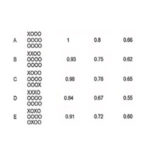
Power Distribution II Signal Contacts in Parallel This is the final article in our series about the distribution of current in power applications. In the previous article in this series, the topic was distribution of current using dedicated high current, several tens of amperes, contacts. This article will address the use of multiple signal—low current,Read More
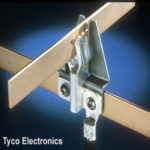
Power Contacts and Connectors Part 1: Power Distribution Today, there are three different approaches to power distribution in connectors, particularly, on current distribution. They include individual high-current contacts, multiple low-current contacts in parallel, and hybrids, which use both approaches in the same housing. Each approach has its advantages and limitations. Let’s begin with high-current contacts,Read More
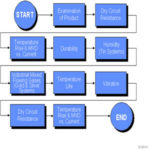
Power Contacts/Connectors Part III: Current Rating 2 This week, let’s examine the current rating test program, which includes the measurements to be made and the conditioning and exposures to be applied in connector testing. Figure 1 includes an example program. A program of this general nature is under consideration in ECA CE-2.0 National Connector andRead More